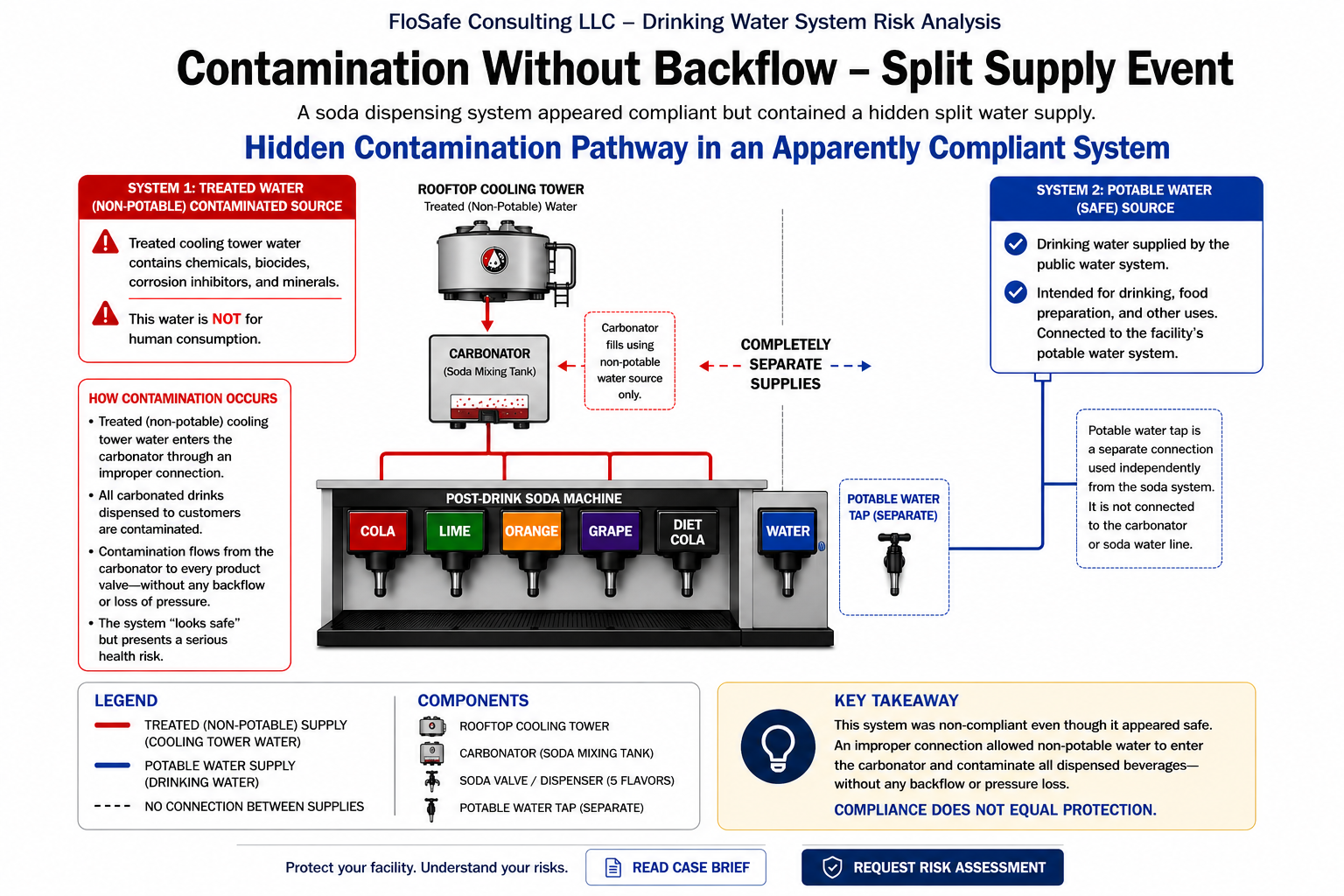
Standard Backflow Evaluations Often Miss Hidden Operational Contamination Pathways

FloSafe identifies operational cross-connection and reverse-flow contamination risks in critical infrastructure water systems using engineering-level contamination pathway analysis.

How Operational Contamination Pathways Develop

Standard device testing does not evaluate undocumented bypasses, operational hydraulic changes, or unintended reverse-flow contamination pathways.

Most drinking water evaluations focus on regulatory compliance — not actual operational configuration.

Undocumented cross-connections, hidden bypasses, and unintended flow paths can exist without triggering alarms or violations.

These hidden conditions are where contamination risks develop.

Engineering-level water system protection for mission-critical and high-risk infrastructure environments.

Specialized Infrastructure Applications

AI Data Centers

Engineering-level review for cooling infrastructure, potable water protection, and operational risk reduction.

Healthcare Facilities

Water system protection and cross-connection review for hospitals, laboratories, and critical care environments.

High Rise Buildings

Backflow prevention and water infrastructure evaluation for complex vertical building systems.

General Industry

Operational water system risk evaluation for industrial and commercial infrastructure.

Frequently Asked Questions

Frequently asked questions about AI data center water infrastructure, hidden cross-connections, backflow risks, and operational system protection.

These questions address common concerns involving cooling systems, potable water interfaces, maintenance bypasses, commissioning vulnerabilities, and contamination prevention in complex water infrastructure environments.

Why are AI data center water systems vulnerable to hidden cross-connections?

AI data centers often contain complex cooling infrastructure, chemical treatment systems, humidification equipment, emergency bypass piping, and maintenance connections operating under variable flow conditions. These systems can create hidden cross-connection and backflow risks that may not be identified during routine compliance testing.

What types of hidden backflow risks occur in AI cooling infrastructure?

Potential contamination pathways can develop through cooling tower makeup water systems, chemical feed equipment, temporary maintenance bypasses, humidification systems, thermal storage interfaces, and improperly isolated auxiliary piping. These conditions may not be visible during standard device testing or routine inspections.

How can early engineering review reduce operational water system risk?

Early-stage engineering review can identify hidden cross-connections, improper bypass arrangements, unprotected auxiliary systems, and operational vulnerabilities before construction or commissioning. Addressing these issues during design can reduce retrofit costs, operational disruptions, regulatory complications, and long-term contamination risk.

Why should AI data centers evaluate potable water interfaces during design?

Potable water interfaces connected to cooling systems, humidification equipment, chemical treatment systems, and emergency bypass arrangements can introduce hidden contamination pathways if not properly isolated. Early evaluation during design helps ensure appropriate backflow protection, system separation, and long-term operational reliability.

Why can contamination risks remain hidden in “compliant” water systems?

Many operational cross-connections and backflow risks develop after construction through maintenance modifications, temporary bypasses, equipment replacements, undocumented piping changes, and commissioning adjustments. Systems may appear compliant during routine testing while hidden vulnerabilities remain within complex infrastructure.